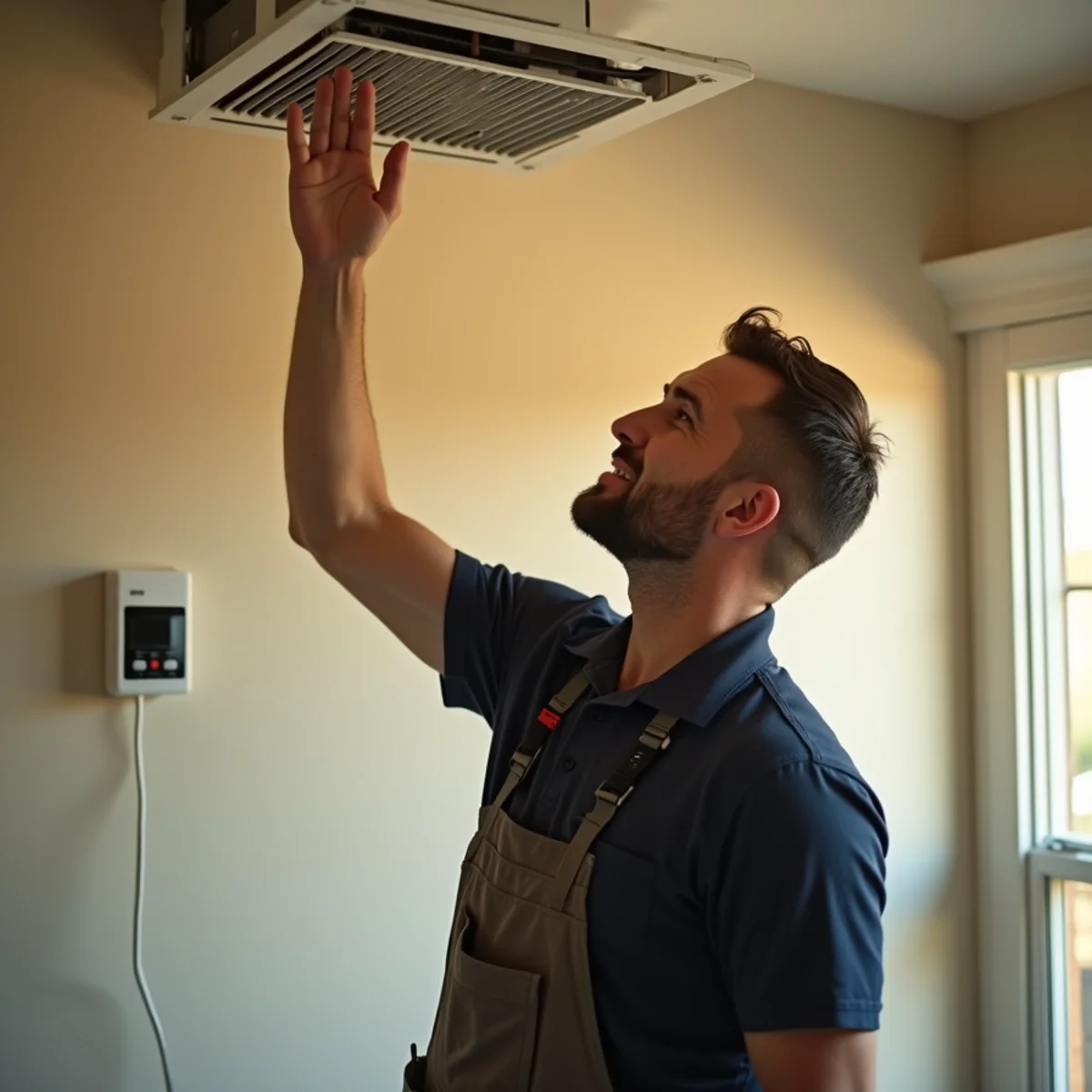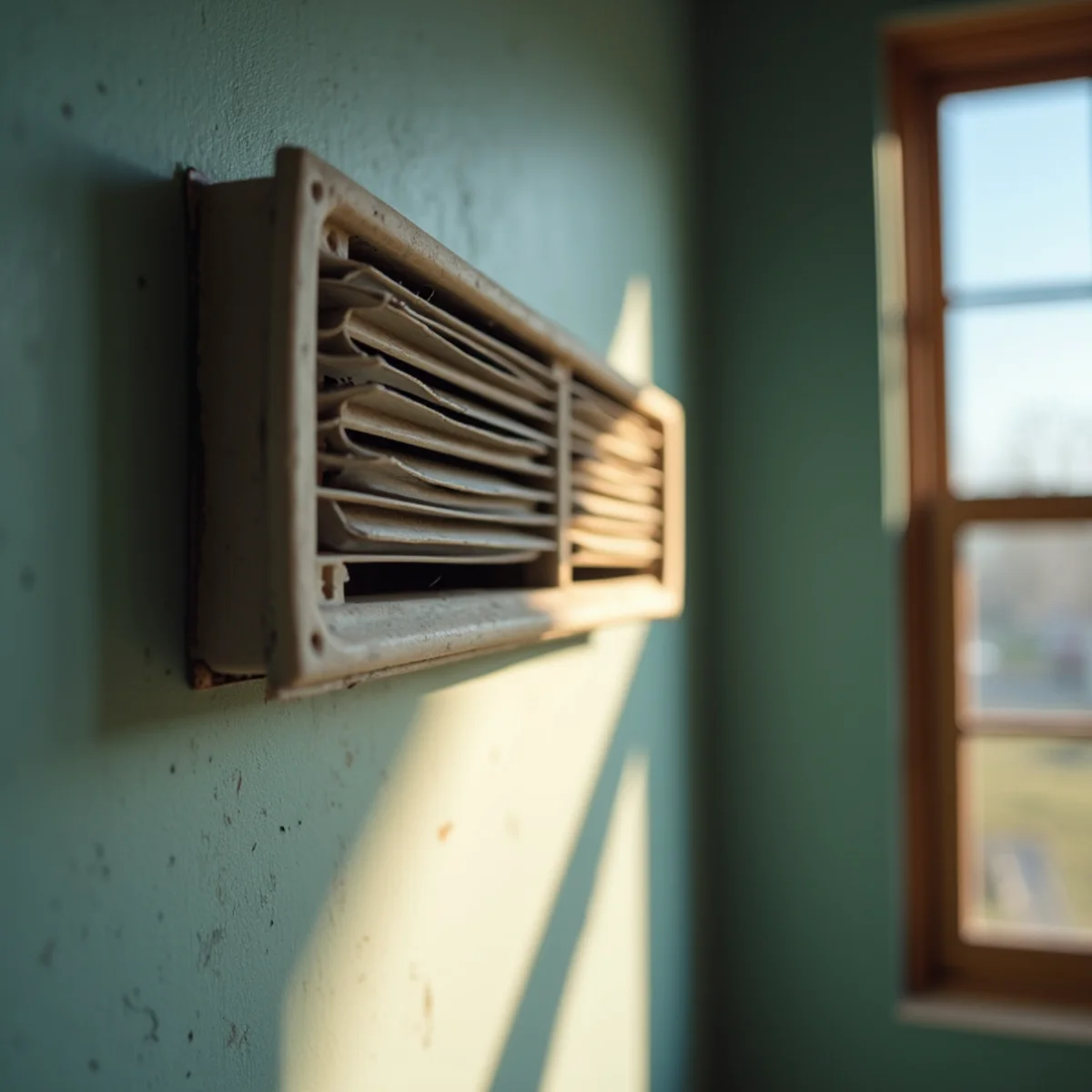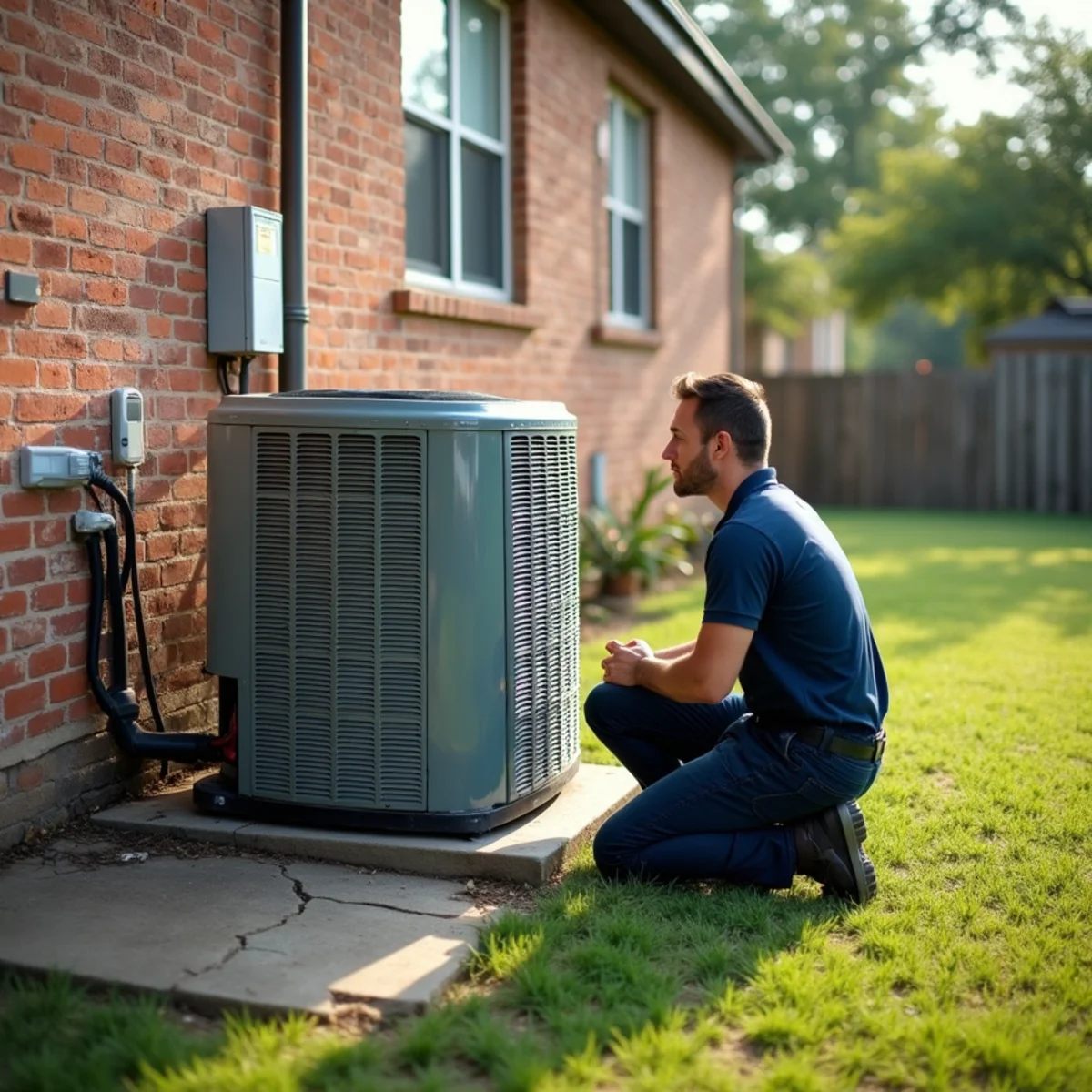
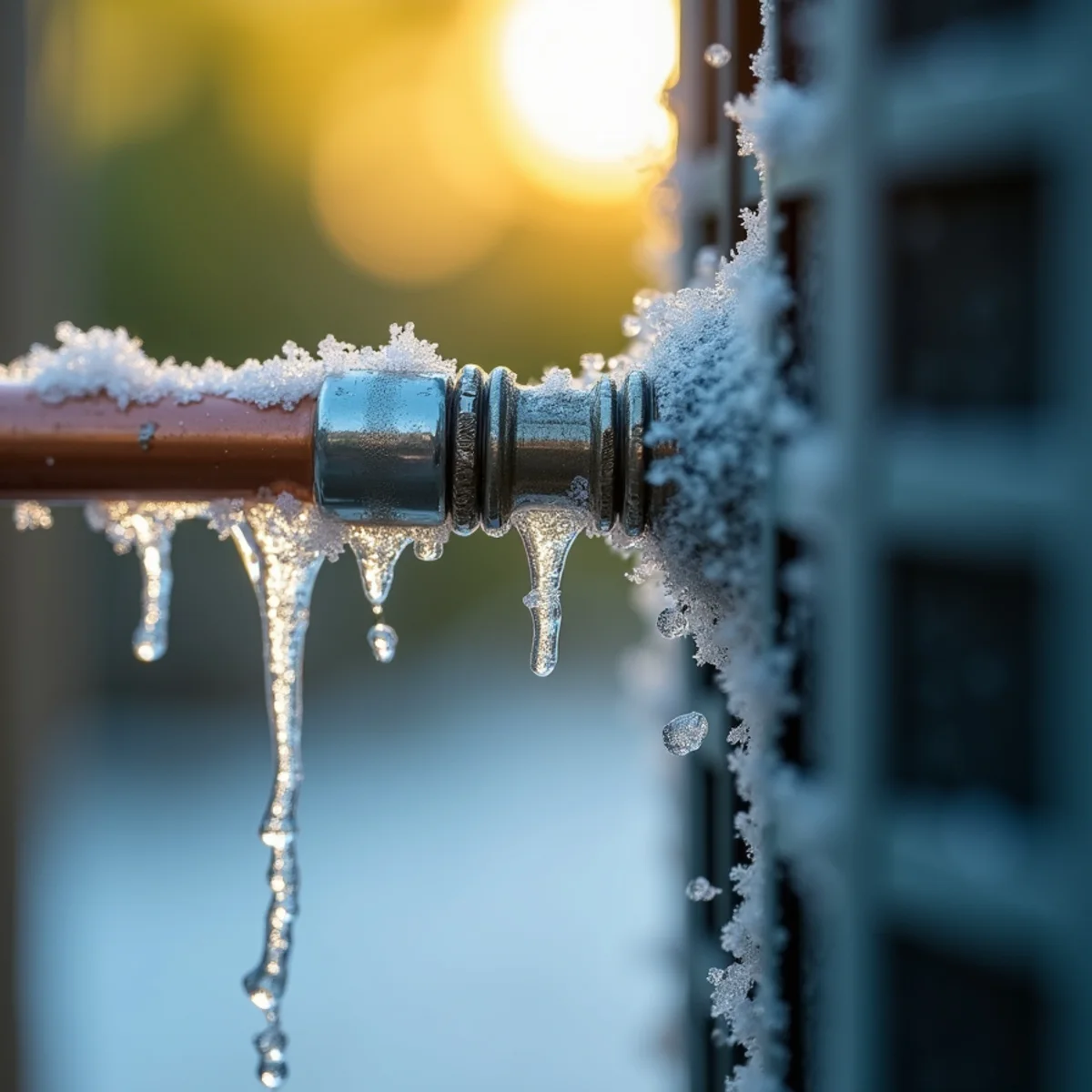
Ice on your evaporator coil or refrigerant line means the coil is getting colder than it should — nearly always because of restricted airflow across the coil or low refrigerant from a leak. Turn the cooling off at the thermostat and switch the fan to ON to thaw the ice, then replace the air filter. Never chip or scrape ice off the coil, and never keep running the system while it's frozen: you can damage the compressor.
This guide covers the question above in depth for Oklahoma City homes and businesses. Here is what it walks through:
- What to do right now: shut off cooling, run the fan, change the filter
- Why ice forms on a coil that's supposed to be cold, not frozen
- Cause 1: Restricted airflow across the evaporator coil
- Cause 2: Low refrigerant from a leak
- Cause 3: Running the AC when it's too cool outside
- What NOT to do: chipping ice, hosing the coil, or running it frozen
- How ice damages the compressor and why that matters financially
- Water damage after a thaw: what to check inside
- Preventing repeat freeze-ups
- When to call a technician
What makes this guide useful: A 'Safe Thaw Procedure' step card — a numbered, timed sequence (thermostat to OFF, fan to ON, place towels under the air handler, wait, replace filter, restart, watch for X) with an explicit DO NOT column running alongside it (do not chip ice, do not use a hair dryer or heat gun, do not hose the indoor coil, do not run cooling while frozen, do not add refrigerant yourself). Paired with an 'Airflow vs. Refrigerant' differential-diagnosis table: how the ice pattern and where it forms (indoor coil only vs. the whole suction line out to the condenser) points toward one cause or the other. Manufacturer pages say 'call a pro' and stop — this gives the homeowner the safe interim procedure they're searching for at 9pm.
Ice keeps coming back after a thaw? That points to a leak or an airflow problem that needs measurement. Call Serrato Heat and Air at (327) 210-5999.