
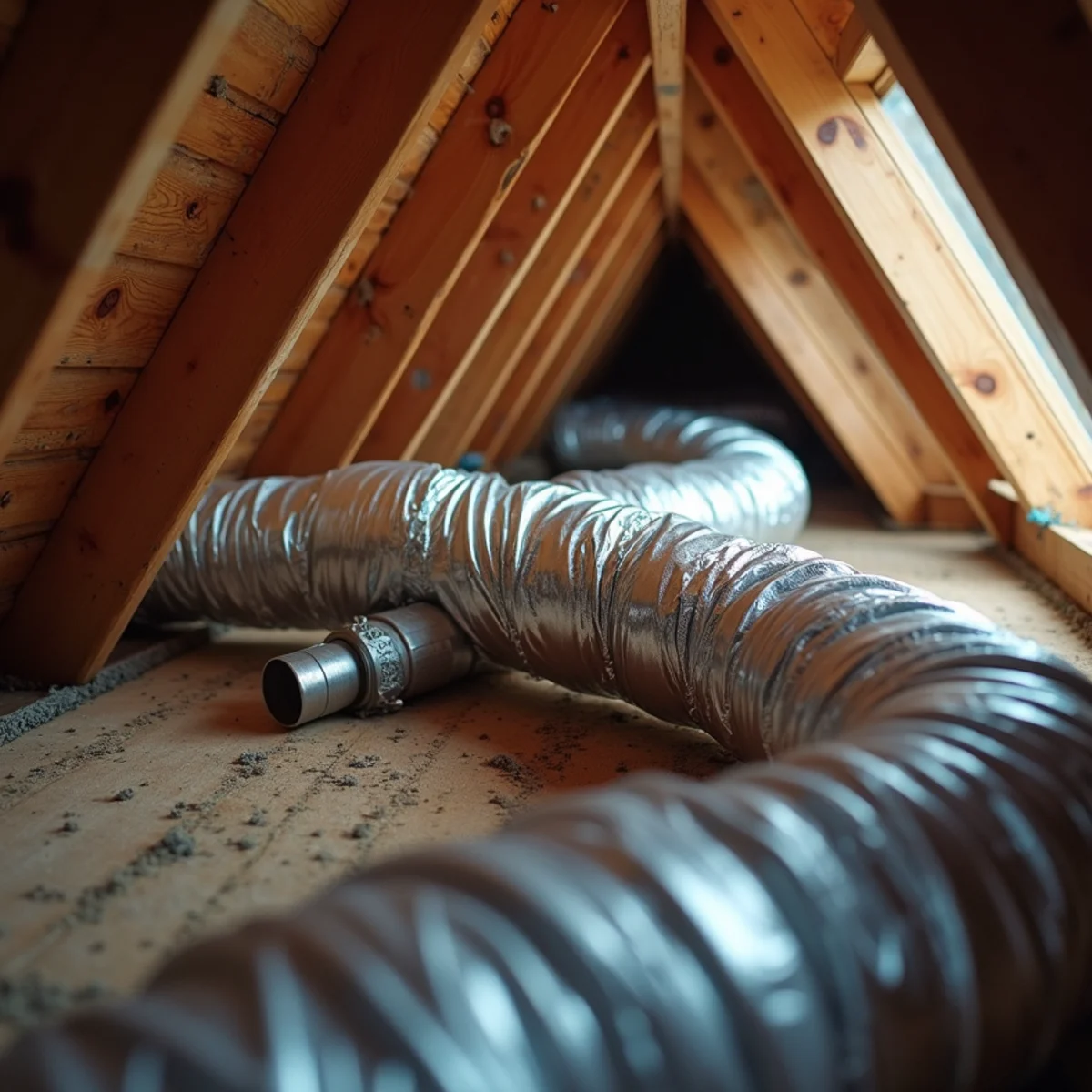
If your ducts leak, the air you paid to cool or heat is escaping into your attic, crawlspace, or wall cavities before it ever reaches a room. The usual signs are rooms that never reach the thermostat setting, a system that runs constantly, dusty registers, and a bill that climbed without a change in habits. Duct leakage is measurable — a technician can test it rather than guess.
This guide covers the question above in depth for Oklahoma City homes and businesses. Here is what it walks through:
- What duct leakage actually is and where it happens
- The signs your ducts are leaking
- Why Oklahoma attics make duct leaks worse
- How duct leakage is diagnosed
- The common leak points, ranked
- Duct sealing vs. duct replacement
- What duct sealing does not fix
- Getting your ductwork evaluated
What makes this guide useful: A cutaway diagram of a typical OKC single-story home with attic ductwork, marking the seven most common leak points in order of how often we find them (plenum takeoff, boot-to-drywall gap, flex-to-collar connection, failed cloth tape at a joint, crushed flex over a truss, disconnected run, return chase). Each callout notes the tell you would see from inside the house. Paired with a comparison table: Duct Sealing vs. Duct Replacement across scope, disruption, what problems each solves, and when each is the wrong choice. The Trane and Carrier duct pages describe sealing generically without ever showing a homeowner where to suspect a leak.
Wondering where your conditioned air is going? Contact Serrato Heat and Air at (327) 210-5999 to request a ductwork evaluation.