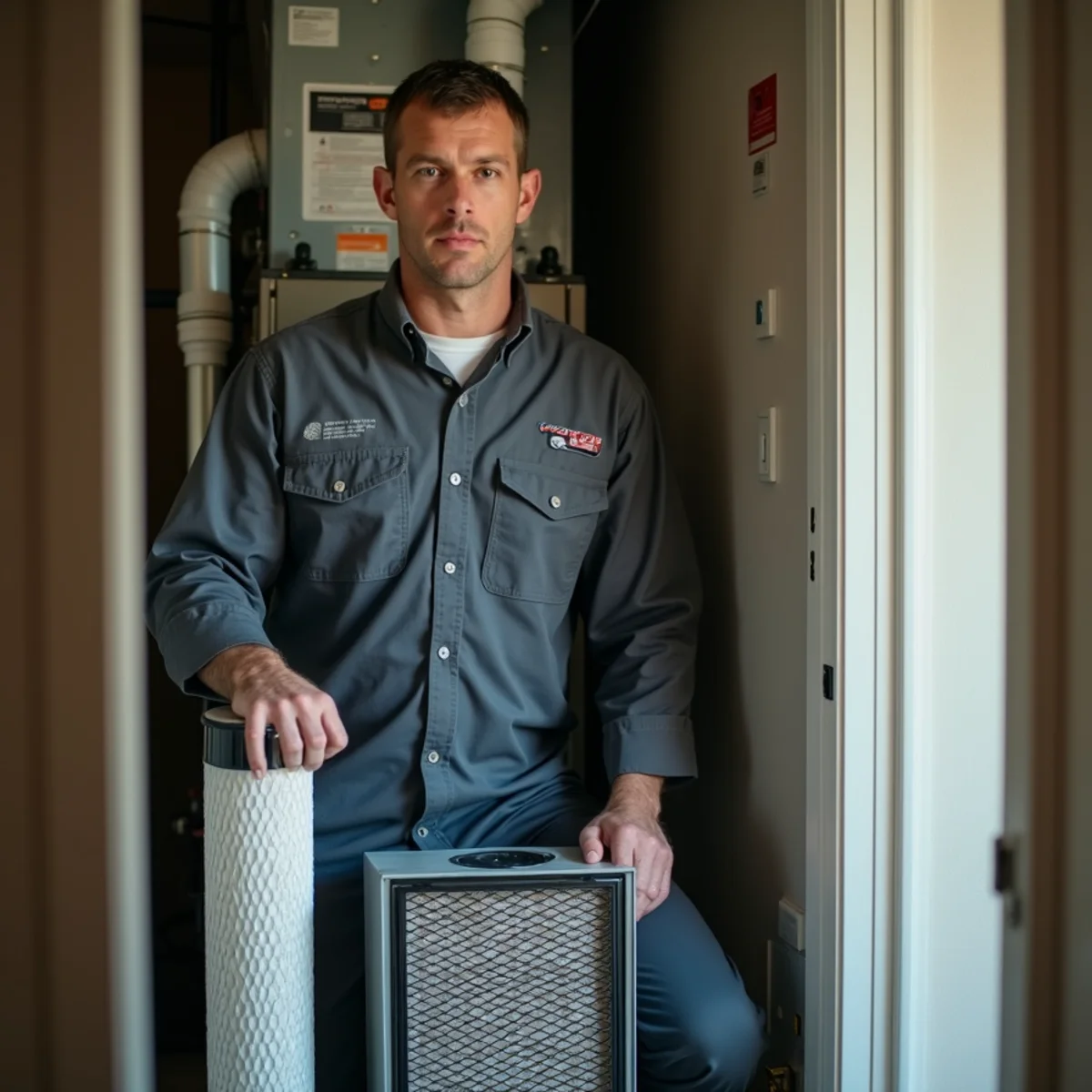
A higher-MERV filter catches smaller particles using the equipment you already have, but past a certain rating it can restrict airflow enough to hurt performance on a system that wasn't designed for it. A whole-home air purifier adds a separate treatment stage sized to your ductwork, so it doesn't force that tradeoff — but it costs more and needs to be matched to your system. If your goal is less visible dust, start with the filter and the filter seal; if you've already tried that and want more, that's when a purifier makes sense.
This guide covers the question above in depth for Oklahoma City homes and businesses. Here is what it walks through:
- The short answer: start with the filter, escalate if needed
- What MERV ratings actually measure
- The airflow tradeoff nobody mentions on the box
- How whole-home air purifiers differ
- Side-by-side: cost, maintenance, and what each one handles
- The filter-slot problem that makes both options underperform
- Which one fits your situation
- A note on health claims
- Getting your system evaluated
What makes this guide useful: A decision tree titled 'Filter or Purifier?' with four honest branch points a homeowner can actually answer at home: (1) Does your filter slot seal, or can you see light/gaps around it? (2) What's your current filter thickness — 1", 4", or 5"? (3) Has anyone measured static pressure on this system? (4) What are you actually trying to reduce — settled dust, pollen, odors? Each terminal node gives a recommendation plus the one thing to verify first. Paired with a MERV comparison table with an added column no manufacturer page includes: 'Airflow risk on a 1-inch slot' rated low/moderate/high, plus a 'What this does NOT do' column. Lennox and Carrier pages compare their own product tiers; this compares the two approaches neutrally.
Not sure whether your system can handle a higher-MERV filter? Call Serrato Heat and Air at (327) 210-5999 and we'll evaluate your airflow before you spend money on either option.